

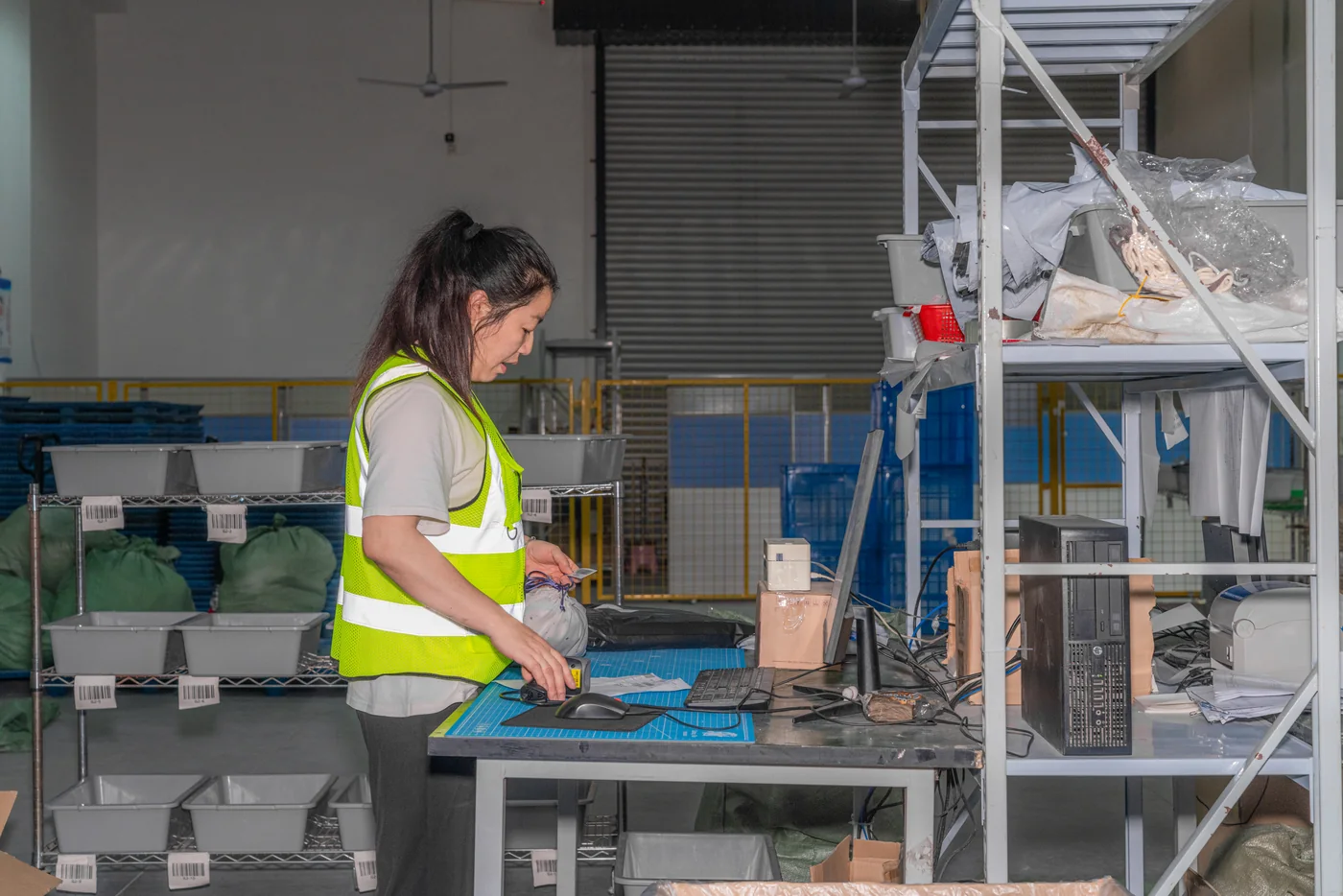
Fulfillment Covers More Than Shipping
Ecommerce fulfillment is the operating process that turns an accepted order into a prepared shipment and supports the work around it. Receiving, storage, stock records, picking, packing and returns all connect with the carrier journey.
The steps depend on one another. A receiving difference can become an incorrect stock record, which can lead to an unavailable order or a wrong pick. Review the whole workflow instead of treating dispatch as the only measure of performance.
Receiving and Storage Establish the Stock Record
Compare incoming cartons and goods with the supplied purchase and packing information. Record accepted quantities and report visible differences before the stock is treated as available.
Put-away needs product and location identification that the team can use consistently. A clear location record and stock-movement process make later picking less dependent on memory and help explain a discrepancy when it occurs.
Picking, Packing, Dispatch and Returns
Picking collects the products and quantities specified by the order. Checking compares that selection with the record. Packing then follows the protection and presentation instructions before a shipment label is prepared.
The handover to a carrier and the return of tracking information should be recorded as part of the workflow. Returned goods need an approval, receiving and inspection process of their own, followed by a decision about restocking or another disposition.
Compare In-House Work With a 3PL Scope
An in-house setup provides direct control over the daily work but needs space, people, equipment and management. It may suit the current product and order profile, especially where hands-on customization is important.
A 3PL performs an agreed scope for an outside business. Compare the work it will take over, the instructions it needs and the costs that remain with the merchant. A staged move or a separate order stream can provide a practical trial rather than an immediate move of the full catalog.
Calculate the Complete Fulfillment Cost
Collect receiving, storage, picking, packing, materials, transport, returns and applicable account charges. Include the in-house resources used for the same tasks when comparing an outsourced option.
Divide the relevant total by the orders handled during the same period and compare it with the order value and margin. Keep unusual work and exceptions visible. The lowest pick fee alone does not explain the cost or customer experience of the complete process.
Ask a Provider to Demonstrate the Work
Use the actual product and order brief to review the proposed provider. Ask for the system connection, receiving records, packing instructions, reporting and the shipment tracking process. Clarify the targets and the conditions under which they are measured.
Review the full fee schedule, the returns process and how inventory and data are released if the account leaves. Unclear communication or incomplete procedures should be resolved before live stock is committed.
Watch Inventory and Return Costs Together
Excess stock and unavailable stock create different problems. Compare physical counts, recorded movements and sales demand so the warehouse plan is based on actual inventory rather than an assumed balance.
Returns create transport, inspection and decision work, even when the product cannot be resold. Include that work when reviewing the margin and when setting the customer-facing policy. A clear reverse workflow is part of fulfillment planning.
Audit the Current Setup and Test One Change
Record the current order profile, complete costs, stock accuracy, preparation errors, dispatch performance and returns. Use the same definitions to compare a proposed change with the existing baseline.
Test a limited change, such as a packing process, a carrier choice or a controlled provider pilot. Review the observed result before changing the full operation, and keep the customer promise consistent with the service the workflow can deliver.
Frequently asked questions
What is the difference between fulfillment and shipping?
Shipping is the transport journey after an order is prepared. Fulfillment also includes the work that makes the shipment possible, such as receiving, stock control, picking, packing and the handling of returns.
When should a store consider outsourcing?
Review outsourcing when the current space, staffing, order accuracy or workload needs to change. Compare a defined 3PL scope with the actual resources and costs of improving the in-house operation.
How should fulfillment cost per order be measured?
Use the relevant costs and orders from the same period. Include the agreed warehouse work, packaging, transport and exceptions, and keep the definition consistent when comparing setups.

.png)
