

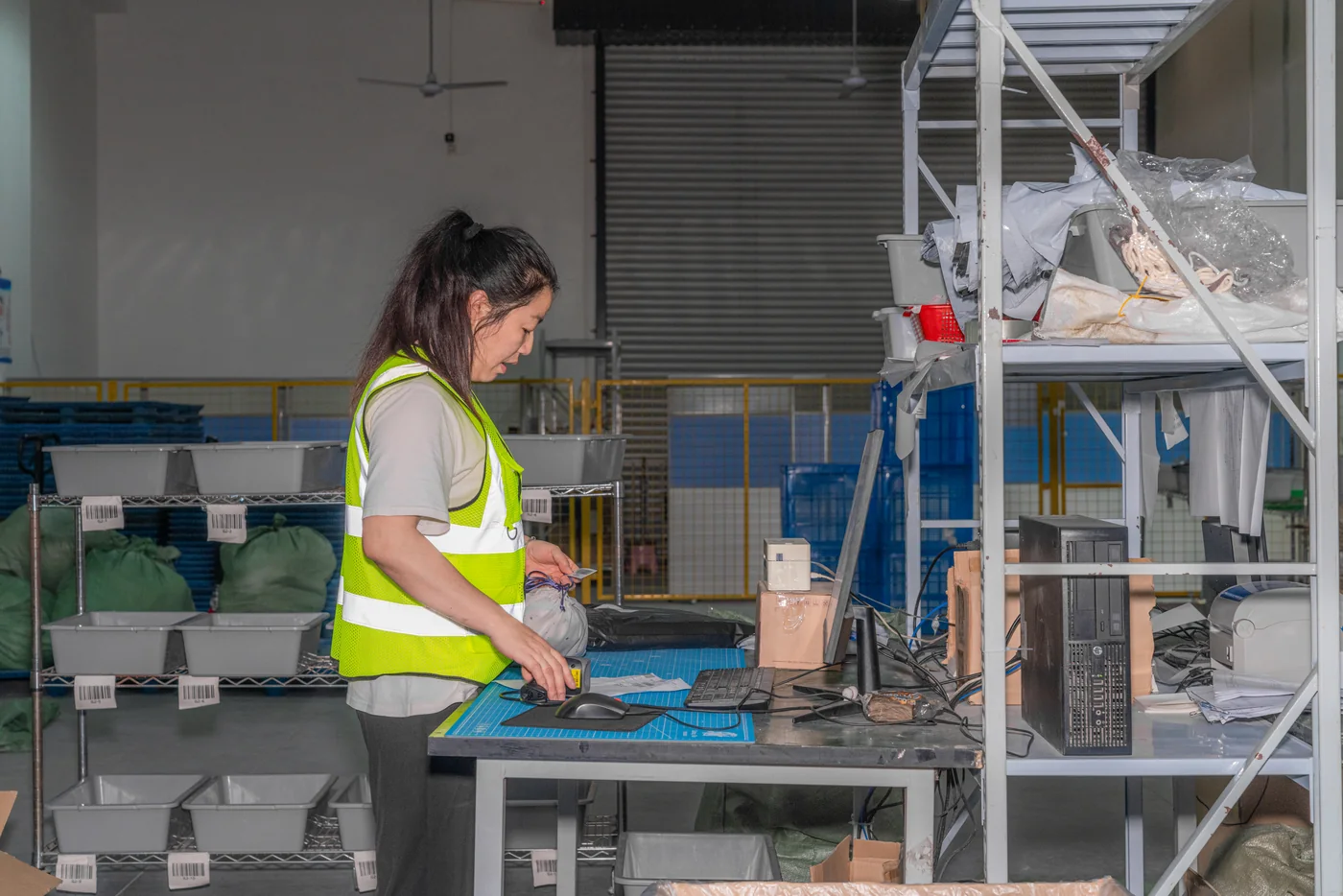
What Is China Warehouse Fulfillment?
China warehouse fulfillment means storing goods in China and using that warehouse to pick, pack and release individual customer orders. Receiving, inventory records and order preparation are part of the operation, alongside the transport that takes a parcel to its buyer.
A freight-forwarding arrangement and an order-fulfillment arrangement have different scopes. Before selecting a provider, confirm whether the work covers individual orders, bulk shipments or both. The warehouse layout, order data and packing instructions need to support the work the store actually requires.
How the Warehouse Workflow Operates
The factory sends finished goods with a packing list and SKU information. At receiving, the warehouse compares the physical delivery with the expected quantities, records the accepted stock and reports differences. Receiving and any product inspection should have separate, written scopes.
An order then enters through the agreed store connection or import process. The warehouse allocates stock, picks the specified product, checks the quantity, packs it and prepares a carrier label. Test the complete path before live orders are released, including how tracking returns to the store.
International delivery adds further handovers. Confirm the selected route, the required cargo information and the parties responsible for the import and final-delivery stages. A warehouse dispatch date and a customer delivery date are different events.
Why Brands Consider Keeping Stock Near the Factory
A warehouse near the supplier gives the business a place to receive goods, check packaging and organize preparation before export. If a problem is found, the remaining stock and the factory are still within the same country, which can make a corrective plan easier to coordinate.
The model can also support a shared stock pool for different order streams. Goods may leave as customer parcels, replenishment batches or wholesale shipments. Whether that improves the business depends on the actual handling costs, routes, inventory requirements and customer experience.
Costs and Risks to Include in the Decision
Storage and pick-and-pack charges are only part of the comparison. Include supplier-to-warehouse freight, receiving, preparation, packaging, outbound transport, applicable import costs, returns and the support work created by delivery exceptions. A lower warehouse charge does not establish a lower total cost.
The customer-facing delivery window needs to follow the actual service selected. A cross-border route may not suit the same promise as stock held near the buyer. Product restrictions, time-zone communication and the way lost, damaged or returned orders are handled also belong in the decision.
Receiving checks do not establish that every product was tested. For products with special handling, documentation or transport requirements, obtain a product-specific review before sending inventory. Confirm who approves a failed check and what happens to the affected stock.
Evaluate the Provider Through the Full Order Loop
Ask for a demonstration using the systems the store will use. Follow a product record, an incoming order, a stock allocation, a packing instruction and a returned tracking number. An API connection, a ready-made connector and a file import are different arrangements.
Request itemized charges, the proposed working schedule, reporting examples and written exception procedures. Review the warehouse arrangement and, where available and permitted, references from businesses with a comparable product and order profile. Treat incomplete answers as points to resolve before a trial.
- Receiving and inspection scope
- SKU and order mapping
- Packing materials and instructions
- Shipping routes and service conditions
- Support and exception handling
- Inventory release and exit arrangements
Decide Which Products Fit the Model
Product size, value, fragility, return pattern and delivery urgency matter as much as the country of manufacture. Compare the likely customer experience with the full cost of each stock location. A product that can accommodate the proposed route may fit differently from an urgent replacement or a delivery-sensitive gift.
The decision does not need to cover the entire catalog. Some businesses separate order streams or stock locations. A limited trial can show whether a China-based workflow suits a particular group of products without moving all inventory at once.
Start With a Controlled Trial and a Ramp-Up Plan
Choose a limited product set, agree the work instructions and run representative orders. Record receiving differences, order errors, dispatch events, delivery performance by destination, packing condition and support exceptions. Include a packaging variation or an exception so the trial tests more than the easiest order.
Set the reporting and approval rules before the trial begins. Increase the work only after the observed results support it. If an issue remains unresolved, use the trial data to adjust the process rather than adding more products to the same problem.
Frequently asked questions
What does a China warehouse fulfillment provider do?
The agreed scope can include receiving stock, recording inventory, preparing customer orders, packing and handing parcels to a carrier. Confirm each task, the order-data process and the reporting arrangements in writing.
Is it automatically cheaper than fulfillment near the customer?
No single warehouse fee answers that question. Compare the complete operating cost, including transport, inventory, returns and support, against the actual service each option can deliver.
What should a trial measure?
Measure receiving accuracy, correct product and packaging selection, dispatch performance, tracking return, destination delivery results and how exceptions are resolved. Use the results to decide whether to expand.

.png)
